Paint Protection Film for Electric Vehicles: What EV Owners Should Know
October 19, 2026
Electric vehicles are showing up in far greater numbers on local roads, and owners tend to care a great deal about how they look. Modern EVs are built around smooth, uninterrupted surfaces and deep, high-gloss finishes. That also means a single chip on the hood or a scuff across the front bumper is far more noticeable than it would be on an older vehicle with more visual clutter. Paint protection film is one of the more practical ways to keep that finish intact.
In short: paint protection film adds a clear, sacrificial layer over the panels most exposed to road debris, which preserves the smooth factory appearance EVs are known for. Professional installers tailor the coverage to each model, working carefully around the sensors and cameras built into modern electric vehicles.
Why EV Finishes Benefit from Added Protection
Electric vehicle adoption across California has climbed steadily, and the state tracks that growth through its zero-emission vehicle statistics. For many owners, the appeal is as much about design as it is about the drivetrain.
That design is what makes the finish worth protecting. EVs are shaped for aerodynamic efficiency, which produces large, flowing panels with few breaks or creases. On a surface like that, nothing distracts the eye from a chip or a cluster of fine scratches. A blemish that would disappear into the lines of a conventional vehicle sits out in the open on a smooth EV hood.
That same shaping pushes the front end forward into the airstream. Low, sloping hoods and large front fascias catch a great deal of what the road throws up, and they catch it at speed.
Front-End Panels Take the Most Damage
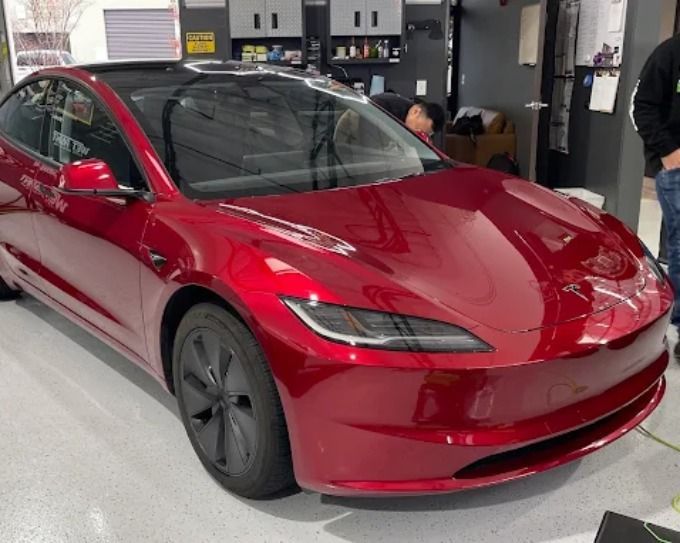
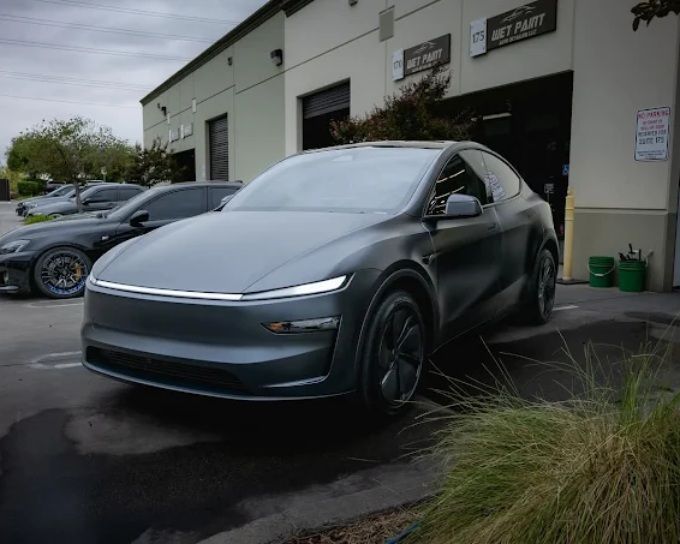
Most of the wear an EV accumulates comes from ordinary commuting. Highway driving kicks up gravel, grit, and sand from the vehicles ahead, and those particles arrive at the front of your car with real force, gradually enough that most owners do not notice until the chips have accumulated.
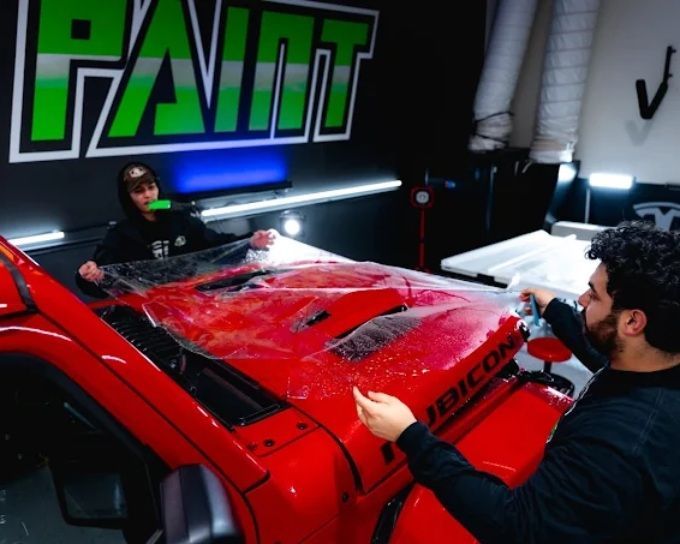
Paint protection film addresses this directly. The film is a clear, flexible layer that absorbs impacts the paint would otherwise take. When a stone strikes a protected hood, the film takes the hit and the finish underneath stays sealed. Quality films also have a self-healing topcoat, where the polymer reflows when warmed by the sun or warm water, so light swirl marks in the film fade rather than accumulating.
Because the front end absorbs the most damage, it is where coverage delivers the most value. Many owners start with the hood, front bumper, fenders, and mirrors, covering the highest-risk areas without wrapping the whole vehicle. If you are comparing options, our guide to ceramic coating versus paint protection film covers how the two differ.
Working Around Sensors and Cameras
This is where electric vehicles need particular attention. Modern EVs carry a significant amount of hardware in the panels where film would normally go. Front bumpers house parking sensors and radar units, cameras sit in the grille area and mirrors, and charge port doors and flush-mounted handles add further complexity.
Film cannot simply be laid over all of it. An installer has to cut precisely around sensor housings and camera lenses so nothing is obstructed and the vehicle’s driver assistance systems keep working as designed. Edges need trimming and tucking so the film seals cleanly without a seam running across a sensor.
That is a large part of why professional installation matters more on an EV. The panels are more complex, the embedded hardware is less forgiving, and the smooth finish that makes an EV attractive also shows every flaw in a rushed application. A lifted edge or trapped bubble is obvious on a flat, glossy hood.
How Installers Tailor Coverage to Each Model
Coverage is not one specification applied to every car. A good installer looks at the specific model, where the sensors sit, how the panels are shaped, and how you actually drive.
A vehicle used mainly for highway commuting takes more front-end abuse and benefits from fuller front coverage. One driven mostly on surface streets and parked in tight spaces may need attention at the door edges, the rear bumper top where luggage scrapes, and the areas around handles. Owners who plan to keep the vehicle for years often choose full-body coverage.
Preparation matters as much as the film. The surface has to be washed and decontaminated so nothing is sealed underneath, and existing swirl marks are best addressed through paint correction first, since film seals in whatever is below it rather than hiding it. Afterward, the vehicle should stay out of harsh conditions briefly while the adhesive cures.
Maintaining the Film
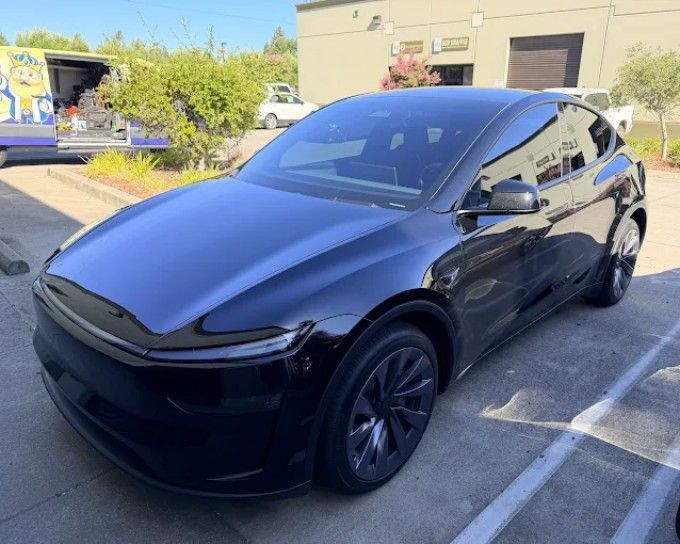
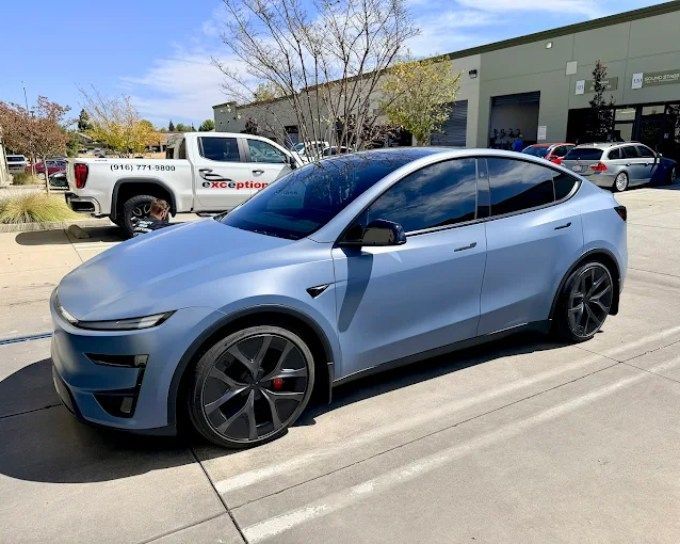
Keeping paint protection film performing well is straightforward:
- Wash with a pH-neutral car shampoo rather than harsh detergents that can degrade the topcoat
- Use a soft microfiber mitt instead of abrasive brushes or sponges
- Keep high-pressure spray away from film edges, where it can work underneath over time
- Rinse off bird droppings, tree sap, and road film promptly, since these can be chemically aggressive if left to sit
- Dry with clean microfiber or in the shade to avoid spotting
- Inspect the edges and front-end panels periodically so any minor lifting is caught early
A professionally installed, well-maintained film keeps doing its job for years and leaves the paint underneath in day-one condition.
Protect Your Vehicle with Wet Paint Auto Detailing
For EV owners, keeping the factory finish clean and unmarked is a large part of what makes the car satisfying to own, and film is the most direct way to do it. If you are considering
paint protection film in Sacramento, the team at
Wet Paint Auto Detailing brings meticulous preparation and precise application to every vehicle, including the careful sensor and camera work modern electric vehicles require. Call
(916) 918-2289 or visit us to learn more and
schedule your appointment today.
Frequently Asked Questions
Does paint protection film interfere with EV sensors or cameras?
Not when it is installed properly. An experienced installer cuts precisely around sensor housings, radar units, and camera lenses so nothing is obstructed. That precision is a main reason professional installation is worth it on a modern EV.
Which panels should an EV owner protect first?
The front end takes the most damage, so the hood, front bumper, fenders, and side mirrors are the usual starting point. Owners who park in tight spaces often add door edges and the rear bumper top.
Will the film change how my EV looks?
A quality film applied well is clear and follows the panel contours, so the finish still reads as factory paint. Because EV surfaces are smooth and glossy, application quality matters a great deal.
Can paint protection film be combined with ceramic coating?
Yes, and many owners do. The film handles impact and self-heals light marks while a coating over the top adds gloss and makes the surface easier to clean.
How long does paint protection film last on an EV?
A properly installed, well-maintained film lasts for years. Gentle washing, keeping pressure away from the edges, and periodic inspection all help it hold its clarity over time.