Ceramic Coating vs Traditional Wax: What Drivers Should Know Before Upgrading
October 12, 2026
If you have been weighing whether to stick with waxing your car or move up to a professional ceramic coating, you are asking the right question. Both protect your paint, but they work in fundamentally different ways and suit different owners.
In short: ceramic coating chemically bonds to your paint and holds up for years against UV exposure, contaminants, and water spotting, while wax sits on the surface and needs reapplication every few weeks. Ceramic coating costs more upfront but delivers more consistent protection with far less ongoing effort.
How Ceramic Coating and Wax Protect Differently
The core difference comes down to how each product attaches to your paint. Wax forms a thin layer that rests on top of the clear coat. It is a sacrificial barrier that takes the abuse so your paint does not, but it wears away with every wash, every rainstorm, and every week of sun exposure.
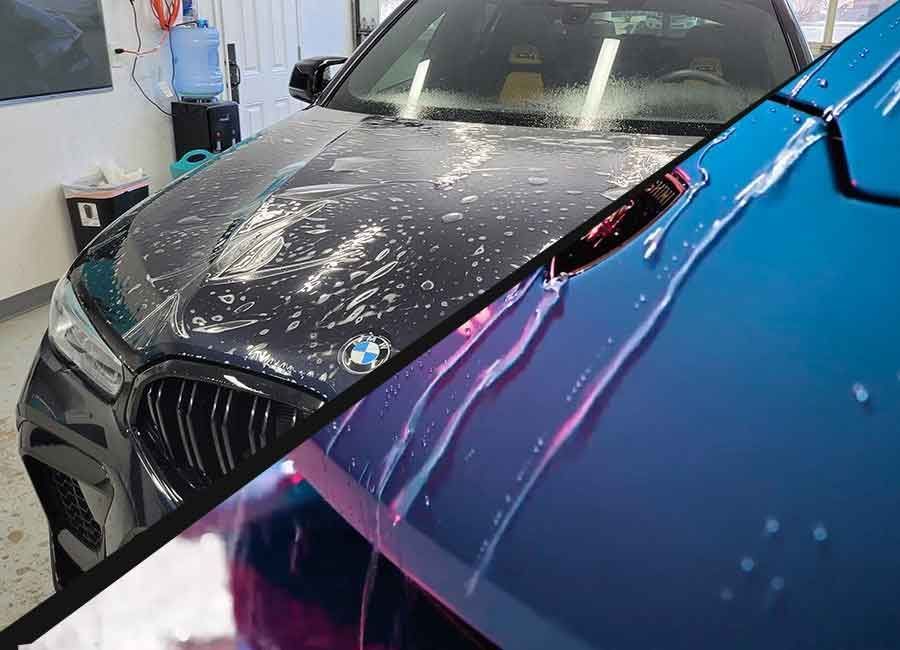
Ceramic coating bonds chemically with the paint surface, filling the microscopic pores in the clear coat and curing into a hard, semi-permanent layer. Because that bond is chemical rather than physical, the coating does not simply rinse off over time. That structural difference drives everything else. A bonded coating resists chemical staining, etching, and water spotting far more effectively than a layer sitting on top. When bird droppings, tree sap, or road film land on a coated car, they have much less opportunity to bond with the paint underneath, so they rinse away instead of leaving a mark. Both products create a hydrophobic surface where water beads and rolls off, but ceramic coating holds that property substantially longer.
Durability and Long-Term Protection
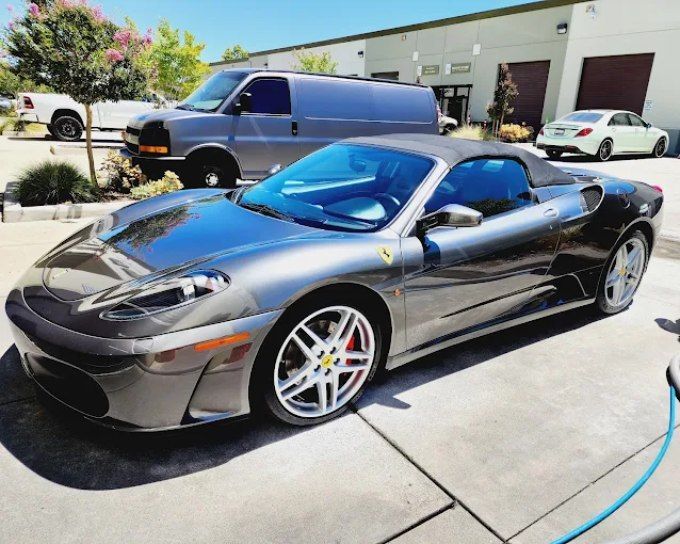
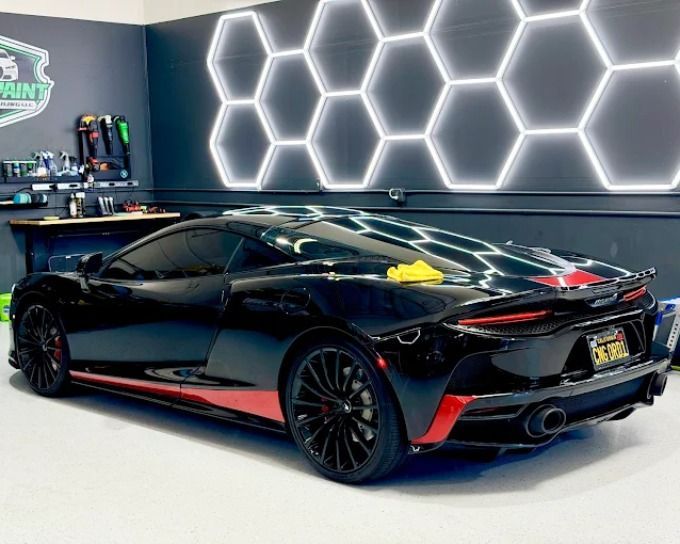
Durability is where the two separate most clearly. A quality wax protects for a matter of weeks before the layer thins and needs renewing. A professionally applied ceramic coating maintains its protective properties for years, depending on the product, the quality of the application, and how the vehicle is maintained.
UV exposure is a large part of why this matters. Sunlight drives the oxidation that fades paint and dulls a finish over time, and that process does not pause. Ceramic coatings include UV inhibitors that keep working through the life of the coating. Wax offers some UV resistance, but it degrades quickly under sustained heat and sun, leaving the paint exposed sooner than most owners realize.
The same gap shows up with wet weather and road grime, since a coated surface keeps shedding water and the dirt it carries. If you are also weighing film, our comparison of ceramic coating and paint protection film covers how the two differ.
What Traditional Wax Still Does Well
Wax still suits plenty of drivers. Carnauba wax, derived from a Brazilian palm, produces a warm depth of gloss that many enthusiasts prefer to the sharper, glass-like reflection of a coating, particularly on darker colors.
A few things keep wax in the picture:
- Low upfront cost, which makes it accessible to anyone doing their own detailing
- Simple application with no curing period, no controlled environment, and no specialized tools
- Fast results, since a full application and buff takes an hour or two
- Easy to remove and redo, so you can adjust the finish whenever you want
- A hands-on routine that many owners find satisfying rather than a chore
If you enjoy detailing your own car regularly, wax delivers real value. The trade-off is that the protection is temporary by design.
Application and Maintenance Differences
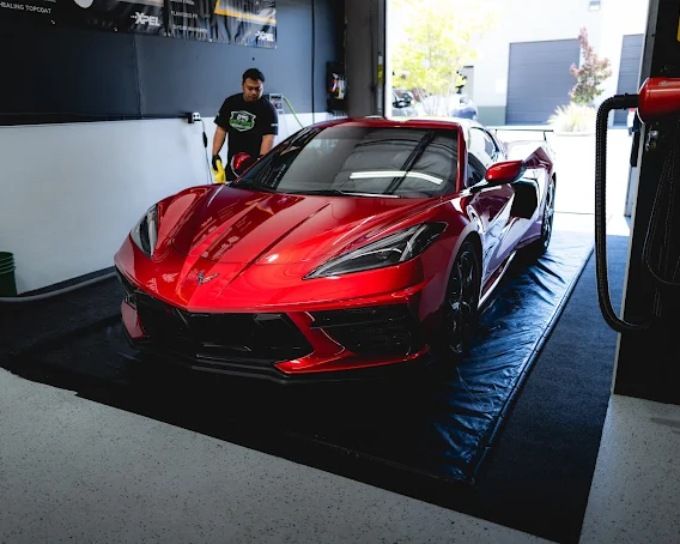
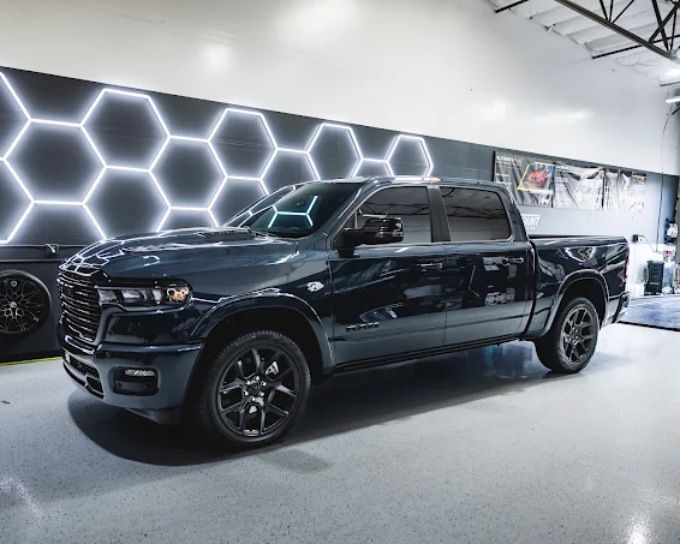
The two processes are not comparable in effort. Waxing requires a thorough wash, then applying and buffing section by section, and most owners can finish in an afternoon.
Ceramic coating application is more involved, which is why it is best done professionally. The surface must be washed and chemically decontaminated so nothing is trapped beneath the coating. Then comes paint correction, where polishing removes swirl marks and oxidation, because a coating seals in whatever is underneath it rather than hiding it. Only then is the coating applied in thin, even sections, followed by an undisturbed curing period in a controlled environment.
Maintenance afterward is where coating owners gain time back. A coated vehicle needs regular washing and occasional inspection rather than a reapplication cycle every few weeks. A few habits keep it performing well:
- Wash with a pH-neutral soap rather than harsh detergents that can degrade the coating
- Use the two-bucket method, with separate rinse and soap water, to avoid dragging grit across the finish
- Avoid automatic washes with abrasive brushes
- Dry promptly and out of direct sunlight to prevent streaking
- Check high-exposure areas like lower panels and wheel wells, where grime builds up faster
Weighing the Long-Term Value
A ceramic coating is a larger single investment than a container of wax, but the comparison is not one purchase against one purchase. Wax has to be repurchased and reapplied many times a year, and if you pay someone else to do it, that labor compounds quickly. Over several years, the recurring cost of maintaining a waxed finish closes much of the gap. A finish continuously shielded from UV damage, etching, and staining also holds its appearance better, which supports resale value. Because a car is a major purchase, it is worth pairing it with sound long-term care, and the FTC’s guidance for car buyers is a useful resource on protecting that investment.
Protect Your Vehicle with Wet Paint Auto Detailing
Choosing between ceramic coating and wax comes down to how much protection you want and how much ongoing effort you want to put in. For drivers who would rather protect the paint once and maintain it simply, a professionally applied coating is the stronger option. If you are considering
ceramic coating in Citrus Heights, the team at
Wet Paint Auto Detailing brings meticulous surface preparation and precise application to every vehicle. Call
(916) 918-2289 or visit us to learn more and
schedule your appointment today.
Frequently Asked Questions
How long does ceramic coating last compared to wax?
A professionally applied ceramic coating protects for years, while wax typically needs reapplication every few weeks. A coating bonds chemically and becomes part of the surface, while wax sits on top and wears away.
Is ceramic coating worth the higher upfront cost?
For most owners who plan to keep the vehicle, yes. The recurring cost of buying and reapplying wax many times a year adds up, and coating also saves the time those applications take.
Does ceramic coating make a car scratch-proof?
No. Ceramic coating resists light swirl marks and minor marring better than wax because the cured surface is harder, but it will not prevent deeper scratches or impact damage.
Can you apply wax over a ceramic coating?
You can, but it is generally unnecessary. Wax applied over a coating sits on top of the hydrophobic surface and can mask the water-shedding behavior the coating provides. A coating-safe maintenance product is the better choice.
Does ceramic coating need to be applied professionally?
Professional application matters because most of the work happens before the coating goes on. Decontamination and paint correction determine how well the coating bonds, and the curing stage needs controlled conditions to set properly.